Reedsy/Discovery Book Review
Must read 🏆

Reedsy/Discovery Book Review
An enjoyable journey through heartbreak and the mending of a broken heart to find an empowered and enlightened woman at the end.
Before I launch into my review, I would like to say a huge thank you to Oquirrh Keyes and Reedsy Discovery for the Advanced Digital Reader Copy of this title. For anyone with their eye on this title, here is my personal review of the book to help you decide whether you are interested or not. All opinions offered are my own.
the quiet calendar, by Oquirrh Keyes, captured my attention for a few reasons. I was really intrigued to see what thirty-one days of grief looked like. From the synopsis, I assumed that the writer had been betrayed by her partner, who in turn made the decision to exit the relationship. It seemed to suggest that at the start of the journey, the author may have been begging and pleading to save the relationship, but over time found the clarity in identifying her boundaries and the strength to uphold them. The blurb outlines a journey that fundamentally sees the writer find themselves as an individual rather than relying on their partner to make up her whole.
One of the first things that struck me about the book was the lowercase type. I immediately thought of e.e cummings, but just as quickly forgot about him once I delved into the text because the similarities die pretty quickly after that. The explanation given for adopting this style is that ‘healing felt quiet, and lowercase made space for the quiet to speak.’ I could not help thinking that if this is how raw and poetic an author’s note could be, I must be in for a treat when we start to tackle the lion share of the book.
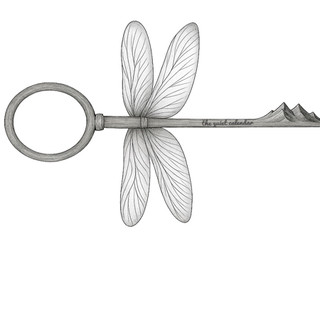
The next thing I noticed, and what stayed with me for the remainder of the book, was the utter beauty of the shaded pencil drawings. They were absolutely stunning and works of art that could exist independently of the prose they were illustrating. The exquisite pictures are not complex, there is no extravagance to them, they are simply small sketches that have a uniform technique applied to them that make fantastic use of shadows and blur to reveal doors, flying keys, cups of tea, things that are rather ordinary and normally not a point of interest, truth be told.
The book shifted in tone very quickly. By day 4, the writer was ready to forget her lover. Granted, in reality, it had actually been a month of longing, but for the purpose of the series, the emerging strength was welcome at this stage. Once the process of healing had started, it appeared to snowball and grow, which was inspiring to read.
In terms of favorite poems, I enjoyed day one, no us. Whilst it was a lengthy lament of grief, I liked the use of formatting to add emphasis including italics and bold, not to mention the use of different fonts. I also liked the powerful repetition of ‘no us’ throughout the text that really hammered the point home that it was over. This was quite the contrast to following poems where the lover returns hoping to breadcrumb his lover only to find that the ship had sailed. Day eleven, untethered was also a standout piece. It served as a powerful and emotive reflection of past behaviors, what they were intended for, what they elicited, and now what the writer sees them for since the removal of rose-tinted glasses.
As the days went on, I found it interesting how the poems got shorter. It felt symbolic of recovery, almost like Keyes recognized that she did not need to explore the feelings or use writing as a way to heal as much anymore. At the start of the book, there was a lot of hurt and grief to process, but as this gives way to anger, the author is seemingly defiant that she will not expend any more time than necessary on this man that she has packaged up and deposited in the past.
I thoroughly enjoyed the poetry collection and am eager for the arrival of Keyes’ second collection next year. I think the collection will appeal to people that have been burned by someone they have loved intimately only to have trust and boundaries broken. At times, the protests about not thinking of the betrayer felt a bit forced, after all, there is a whole collection of poetry dedicated to trying to get over someone and find oneself, but this adds to the reality of mending a broken heart. With no fault to be found in this book, I wholeheartedly rate it 5 out of 5 stars.


Comments